
Description
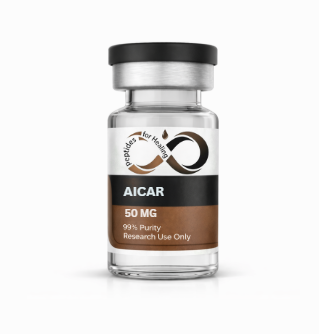
AICAR Peptide 50 mg
AICAR Peptide 50 mg is an analog of adenosine monophosphate (AMP), a nucleotide that is considered to play an important role in cellular energy metabolism. It has been studied for its potential applications in research, particularly in reducing reperfusion injury after tissue ischemia and mitigating metabolic disorders. AICAR has been suggested to exert this potential by apparently activating AMP-activated protein kinase (AMPK), an enzyme that regulates various metabolic processes.
AMPK potentially plays a role in restoring energy balance. It might do this by inhibiting anabolic processes—energy-consuming pathways like protein and fatty acid synthesis. Simultaneously, it might activate catabolic processes, such as the breakdown of glucose and fats, which generate ATP, thereby increasing the energy supply.
There is also a possibility that AMPK influences various other cellular processes, including autophagy, mitochondrial biogenesis, and the regulation of inflammation and stress responses. This broad range of actions suggests that AMPK might be involved in regulating several aspects of cellular and organismal function.
By potentially activating AMPK, AICAR is posited to possibly increase glucose uptake in skeletal muscle, enhance insulin sensitivity, and improve glucose tolerance. AICAR has also been suggested by researchers to have anti-inflammatory potential and may improve physical performance in certain experimental models.
Related metabolic research compounds:
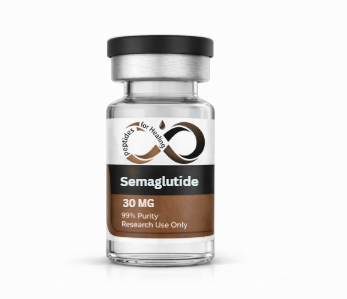
👉 GLP-1 5mg
👉 MOTS-C 10mg
Chemical Makeup
- Molecular formula: C9H15N4O8P
- Molecular Weight: 338.21 g/mol
- Other known titles: AICA ribonucleotide
Research and Clinical Studies
AICAR Peptide and Tissue Protection
AICAR may have organ-protective potential, especially against ischemia and reperfusion injury. The nucleotide has been suggested to potentially reduce myocardial infarction size and improve cardiac function in an animal model of myocardial ischemia-reperfusion injury.
One meta-analysis aimed to investigate the potential of AICAR on cardiovascular tissues. The data was collected from 5 randomized, placebo-controlled, double-blind clinical studies. From the results, AICAR was suggested to reduce myocardial tissue infarction size and cardiac cell death and apparently improve the overall outcome of the experiment. The study concluded that AICAR may “reduce adverse cardiovascular outcomes.”
Researchers posited that the apparent protective potential of AICAR may be due to its action on cellular metabolism. AICAR may potentially alter it to become more resistant to lack of oxygen by apparently upregulating the availability of energy that can be used even in anaerobic conditions.
One such process is the apparent increase in myocardial glucose availability. To achieve that, AICAR may promote myocardial glycogenolysis by activating AMPK. Experiments using isolated hearts from halothane-anesthetized murine models suggested increased glycogenolysis while glycogen synthesis remained negligible.
AICAR was noted to potentially increase myocardial levels of ZMP, its active intracellular form, without affecting glycogen synthase or glycogen phosphorylase activity in homogenates.
Related tissue-protection peptides:
👉 BPC-157 10mg
👉 TB-500 5mg
AICAR Peptide and Liver Protection
One study investigated the potential of AICAR on an experimental murine model of ethanol-induced hepatic steatosis. Chronic ethanol exposure appeared to result in fatty liver development.
Upon AICAR administration, the degree of hepatic tissue alteration appeared attenuated. AICAR was also posited to decrease sterol regulatory element-binding protein 1c (SREBP-1c) and reduce fatty acid synthase (FAS) expression, reducing triglyceride synthesis.
SREBP-1c regulates genes involved in cholesterol, fatty acid, and triglyceride synthesis. FAS plays a key role in converting acetyl-CoA and malonyl-CoA into palmitate. Reduction in SREBP-1c may therefore reduce lipid accumulation.
AICAR Peptide and Insulin Sensitivity
Studies suggest AICAR may improve insulin sensitivity due to AMPK activation. One experimental model investigated glucose transport in equine skeletal muscle.
AICAR appeared to decrease glucose and increase insulin concentration without affecting lactate. It increased phosphorylated AMPK levels and upregulated GLUT8 expression, potentially enhancing glucose uptake.
Another study showed AICAR and physical activity both increased glucose uptake in muscle and peripheral tissues. AICAR may also influence ERK1/2 phosphorylation, part of the MAP kinase signaling pathway.
AICAR may also reduce hepatic glucose output and increase fatty acid oxidation while inhibiting lipolysis.
AICAR Peptide and Endurance
Researchers posit that AICAR may activate AMPK, glycogen phosphorylase, and fructose-1,6-bisphosphatase. This may contribute to enhanced oxidative metabolism and mitochondrial biogenesis.
One experiment suggested AICAR may increase running endurance in sedentary murine models by 44%.
It is believed AICAR may target the AMPK–PPARδ pathway, which regulates energy metabolism and mitochondrial biogenesis. PPARδ activation may promote endurance-like adaptations without exercise.
Another study reported increased endurance compared to exercise-trained controls.
AICAR may also enhance nitric oxide-mediated blood flow, improving muscle oxygen delivery during exercise.
Related endurance peptides:
👉 HGH Fragment 176-191
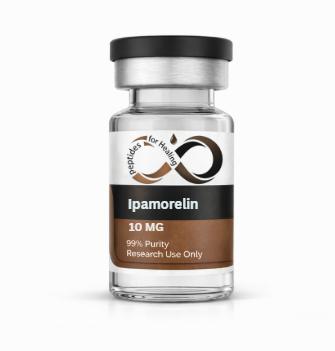
👉 Ipamorelin 10mg
AICAR Peptide and Malignant Cell Lines
Research indicates AICAR may trigger apoptosis in B-cell chronic lymphocytic leukemia (B-CLL) models. This may involve activation of caspase-3, -8, and -9 and cytochrome C release.
AICAR exposure leads to AMPK phosphorylation. Inhibitors such as NBTI, 5-iodotubercidin, and adenosine reduced apoptosis, suggesting intracellular uptake is required.
AICAR did not appear to affect p53 pathways, suggesting a p53-independent mechanism.
T cells showed lower sensitivity compared to B-CLL cells, likely due to lower ZMP accumulation.
AICAR Peptide Product Notice
AICAR peptide is available for research and laboratory purposes only. Please review and adhere to Terms and Conditions before ordering.
👉 Shop Peptides
References
Cieslik, K. A., et al. (2013). AICAR-dependent AMPK activation improves scar formation in the aged heart in a murine model of reperfused myocardial infarction. Journal of Molecular and Cellular Cardiology, 63, 26–36.
https://doi.org/10.1016/j.yjmcc.2013.07.005
Mangano D. T. (1997). Effects of acadesine on myocardial infarction, stroke, and death following surgery. JAMA, 277(4), 325–332.
https://doi.org/10.1001/jama.277.4.325