
Your cart is empty
You may check out all the available products and buy some in the shop
Return to shopTendon injuries are among the most challenging musculoskeletal conditions to recover from due to their slow biological repair process. Peptides for tendon healing are increasingly discussed in regenerative research because tendons have limited blood supply and require highly organized collagen remodeling to restore proper function.
Interest in peptides for tendon healing has grown in both sports medicine and regenerative science as researchers explore how cellular signaling may influence tissue repair pathways. Compounds such as BPC-157 and TB-500 (Thymosin Beta-4) are frequently studied in relation to inflammation response, collagen repair, and recovery signaling.
This article explains how tendon healing works and how peptides for tendon healing are being studied in connective tissue regeneration research.
Tendons are strong connective tissues that attach muscles to bones and transmit mechanical force needed for movement. They are primarily made of collagen type I, arranged in tightly packed parallel fibers that provide strength and elasticity.
One of the key reasons peptides for tendon healing are being researched is because tendons have a very low blood supply. This limits oxygen delivery, slows nutrient transport, and significantly reduces the speed of tissue repair.
Tendon healing occurs in three overlapping stages. The first stage is inflammation, where the body clears damaged tissue and activates repair signals. The second stage is proliferation, where new collagen is produced. The final stage is remodeling, where collagen fibers reorganize into a stronger structure.
If this process is disrupted, the tendon may heal with weaker alignment, increasing reinjury risk and long-term dysfunction.
Peptides for tendon healing are short amino acid chains that function as signaling molecules in the body. They do not directly build tissue but may influence how cells communicate during repair processes.
Researchers studying peptides for tendon healing focus on several biological mechanisms:
Collagen synthesis is one of the most important. Proper tendon repair depends on organized collagen fiber formation.
Inflammation regulation is another key area. Controlled inflammation is necessary for healing, but excessive inflammation can delay recovery and damage tissue.
Angiogenesis, the formation of new blood vessels, is also studied because improved blood flow may support oxygen and nutrient delivery to injured tendons.
Extracellular matrix remodeling is another focus area, referring to how tissue structure is rebuilt after injury.
Scientific reference for tendon biology:
https://www.ncbi.nlm.nih.gov/pmc/articles/PMC4857232/
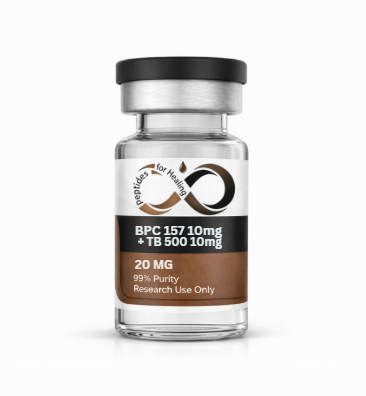
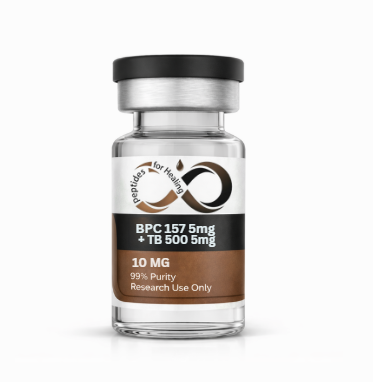
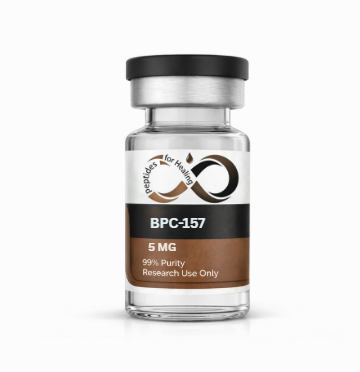
BPC-157 is one of the most widely discussed compounds in peptides for tendon healing research. It has been studied in preclinical models for its potential role in soft tissue repair mechanisms.
Research interest includes collagen organization, inflammatory response regulation, and cellular repair signaling. Animal studies involving tendon and ligament injuries suggest improved healing responses under certain conditions.
BPC-157 https://peptidesforhealing.com/peptides/bpc-157-5mg-x-10-vials/ is frequently referenced in regenerative discussions due to its potential biological activity in tissue repair pathways.
However, human clinical data is still limited. Most findings come from laboratory or animal studies, meaning conclusions about safety and effectiveness in humans are not yet definitive.
TB-500 (Thymosin Beta-4) is another peptide commonly associated with peptides for tendon healing research. It plays a role in actin regulation, which is essential for cell movement and tissue repair.
In tendon healing studies, TB-500 is linked to cellular migration, which helps repair cells move into damaged tissue more efficiently.
It is also studied for angiogenesis support, which improves blood vessel formation and nutrient delivery to injured areas.
Another key area is tissue remodeling, where collagen fibers are reorganized into structured and functional tissue during recovery.
TB-500 (Thymosin Beta-4) https://peptidesforhealing.com/peptides/tb500-thymosin-beta-4-acetate-10mg-x-10-vials/ remains under investigation and has not yet been validated in large human clinical trials.
Collagen is the main structural protein in tendons and plays a critical role in strength, flexibility, and mechanical performance.
During tendon recovery, collagen must be rebuilt in a highly organized parallel structure. Poor alignment can reduce tendon strength and increase reinjury risk.
Research related to peptides for tendon healing often overlaps with collagen science because collagen requires amino acids such as glycine, proline, and hydroxyproline for synthesis.
Collagen support is also linked to connective tissue integrity, joint health, and long-term structural recovery.
Add these images to improve SEO score:
Image 1
ALT text: peptides for tendon healing collagen structure and tendon repair process
Image 2
ALT text: tendon injury healing stages inflammation collagen remodeling and recovery
Image 3
ALT text: bpc-157 and tb-500 peptides for tendon healing regenerative research
Although peptides for tendon healing are widely discussed in research and online communities, most studies remain in early stages.
Many findings are based on animal models or laboratory experiments rather than large-scale human clinical trials. This limits certainty regarding effectiveness, dosage, and long-term safety.
Additionally, results can vary depending on experimental design, biological conditions, and compound purity.
Because of this, peptides should be considered experimental compounds within regenerative science rather than established medical treatments.
Even with growing interest in peptides for tendon healing, recovery still depends primarily on foundational biological and mechanical principles.
Progressive loading is one of the most important factors. Tendons adapt to controlled mechanical stress, which stimulates collagen production and strengthens tissue over time.
Physical therapy is also essential for restoring mobility, flexibility, and function.
Other key factors include adequate sleep, nutrition, protein intake, and proper recovery time.
Without these fundamentals, tendon healing is often incomplete regardless of experimental approaches.
The information provided in this article about peptides for tendon healing is for educational and informational purposes only. It is not intended as medical advice, diagnosis, or treatment.
Peptides discussed in this content, including BPC-157 and TB-500 (Thymosin Beta-4), are still under scientific investigation, and their safety and effectiveness in humans have not been fully established through large-scale clinical trials.
Always consult a qualified healthcare professional before considering any medical or experimental compounds. This website does not promote self-medication or unsupervised use of any substances.